 |
Yorkshire
Regiment War Graves, - Vailly British Cemetery, Vailly-sur-Aisne (Aisne, France) |
|
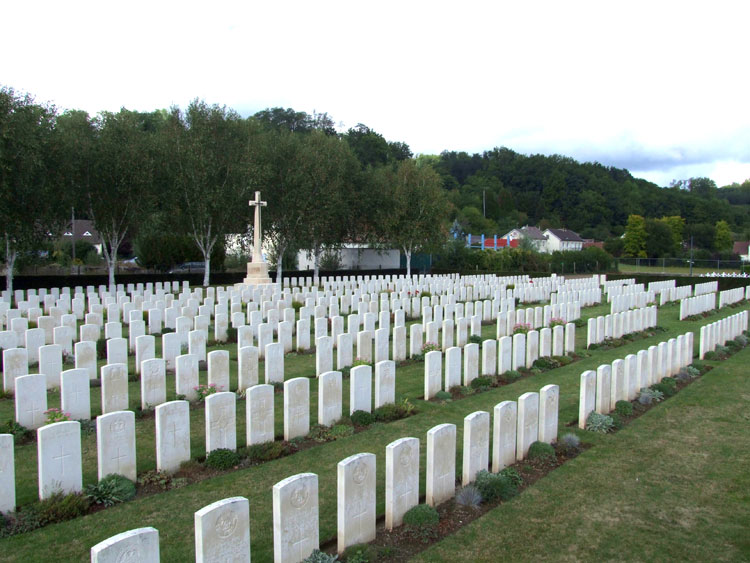 Vailly
British Cemetery, Vailly-sur-Aisne (1)
Vailly
British Cemetery, Vailly-sur-Aisne (1)
Photo : Richard Roberts (<richard.nsw@googlemail.com>)
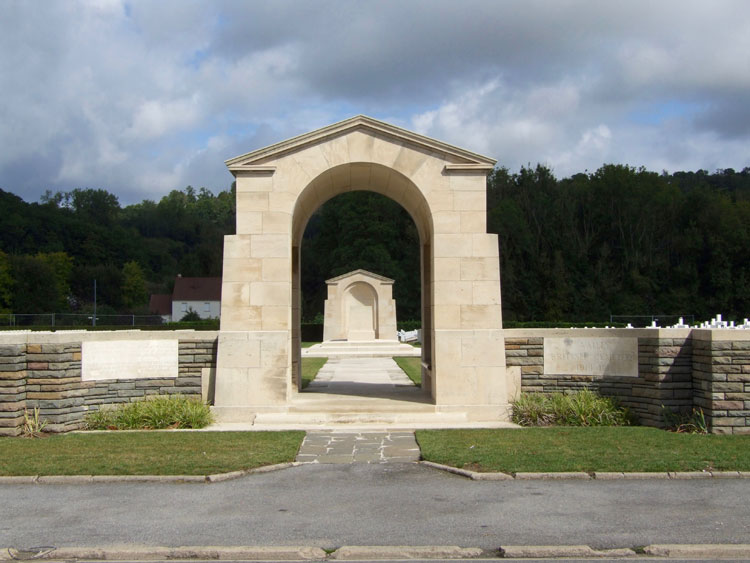
The village of Vailly-sur-Aisne was the point at which the 3rd Division crossed the river Aisne on 13 and 14 September 1914 during the Allied advance from the Marne. It fell to the German forces in 1915, was retaken by the French during the Chemin des Dames Offensive in April 1917, lost again to the Germans in June 1918 and finally captured by the French on 15 September 1918. Vailly British Cemetery was established after the Armistice when the remains of Commonwealth soldiers were brought here from other burial grounds and battlefields throughout the region.
The cemetery now contains over 670 Commonwealth burials and commemorations of the First World War. The first day of the Battle of the Aisne Following the Allied victory at the Battle of the Marne in mid-September 1914, the German forces retreated to the high ground of the Chemin des Dames ridge on the north bank of the River Aisne. As they moved northward, the Germans were closely pursued by units of the British Expeditionary Force (BEF) and their French allies. The first British troops crossed the Aisne at Venizel on the evening of 12 September, and Allied units crossed at different points along the river over the course of the next day. The Royal Scots and Royal Irish regiments made their way over the remains of the bridge at Vailly-sur-Aisne, under steady shellfire, on the afternoon of the 13th. By the early hours of the following morning British and French troops had formed bridgeheads at several points on the north bank of the river and were preparing to attack. The Allied intention was to advance north toward Laon, capture the heights, and force the German armies to continue their retreat. Allied commanders were unaware of the real strength of the enemy forces on the Chemin des Dames ridge, but it soon became clear that the German units had dug trenches, were supported by heavy artillery, and intended to stand and fight. In heavy rain and dense mist, brigades of the 1st and 2nd Divisions of the BEF began advancing toward the German lines between 3 a.m. and 5 a.m. on the morning of 14 September. They had hoped to seize as much enemy ground as possible before day break, but despite some early successes German resistance was determined and by 7 a.m. British troops were coming under heavy rifle, machine-gun and artillery fire. Thick fog, combined with the sheer number of units deployed and the unexpected strength of the German forces, caused much confusion on the battlefield. The British battle plan was also frustrated by the unexpectedly accurate fire of German howitzers on the heights. As the day wore on, the battle descended into a series of attacks and counter-attacks and both sides suffered heavy casualties. By nightfall on 14 September, British units on the north bank of the river had been ordered to dig trenches and reinforce their positions, which now spanned a twenty-mile front. Although the Battle of the Aisne continued for another ten days, neither side could claim a decisive victory; the German forces failing to drive the Allies back across the river, and the Allies unable to push the Germans from the ridge. This ‘stabilization’ of the front marked the beginning of trench warfare – a gruelling stalemate that would last for almost four years.
Amongst the graves are those of 7 soldiers who served with the Yorkshire Regiment.
We are very grateful to Richard Roberts (<richard.nsw@googlemail.com>) for having taken the photos of the cemetery and the headstones.
Click on the thumbnail image of a headstone for a larger version of the photo which opens in a new window.
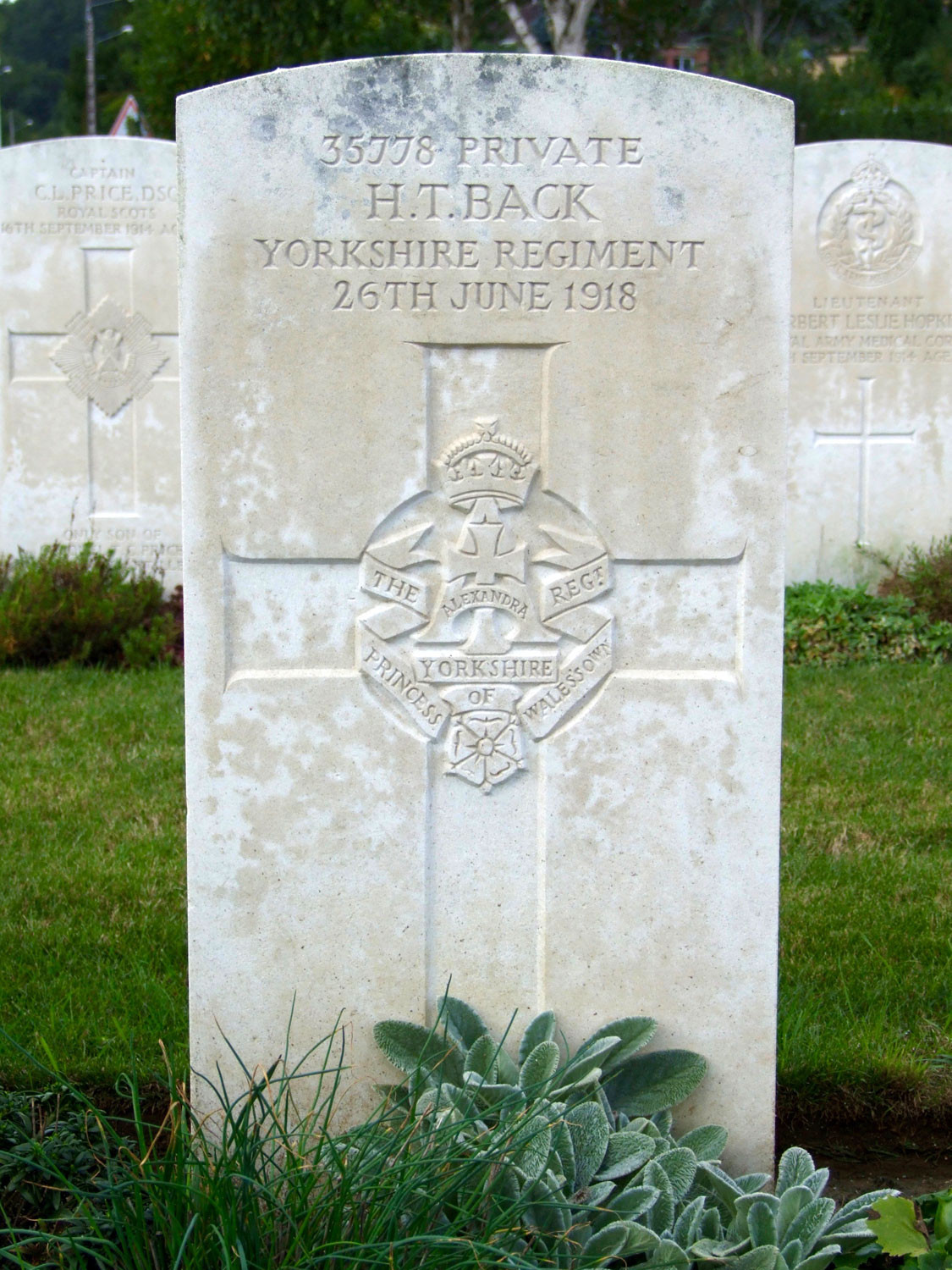 |
Private Harry Thomas Back. 35778.
5th Battalion the Yorkshire Regiment, formerly G/11967 Middx Regt. Son of Mary Back, of 15, Mattison Rd., Harringay, London, and the late Thomas Back. Killed 26 June 1918. Aged 22. Born Holborn (London), Enlisted Harringay (London). |
|
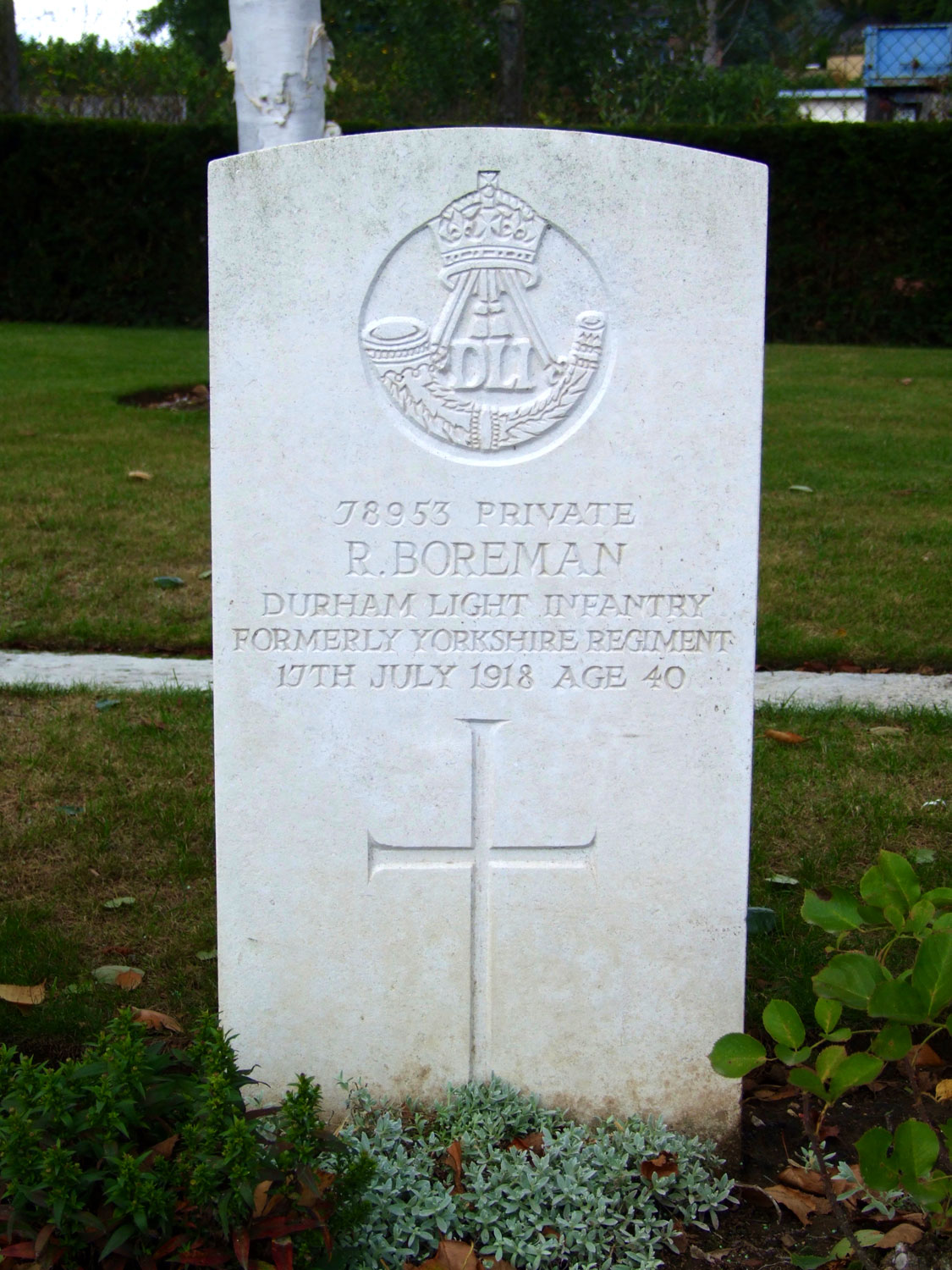 |
Private Ringrose Boreman. 78953.
7th Battalion Durham Light Infantry, formerly 6987 5th Battalion the Yorkshire Regiment. Son of the late Ringrose and Jane Boreman. Born at Scarborough. Died 17 July 1918. Aged 40 Born Scarborough, Enlisted Richmond, Resided Scarborough. |
|
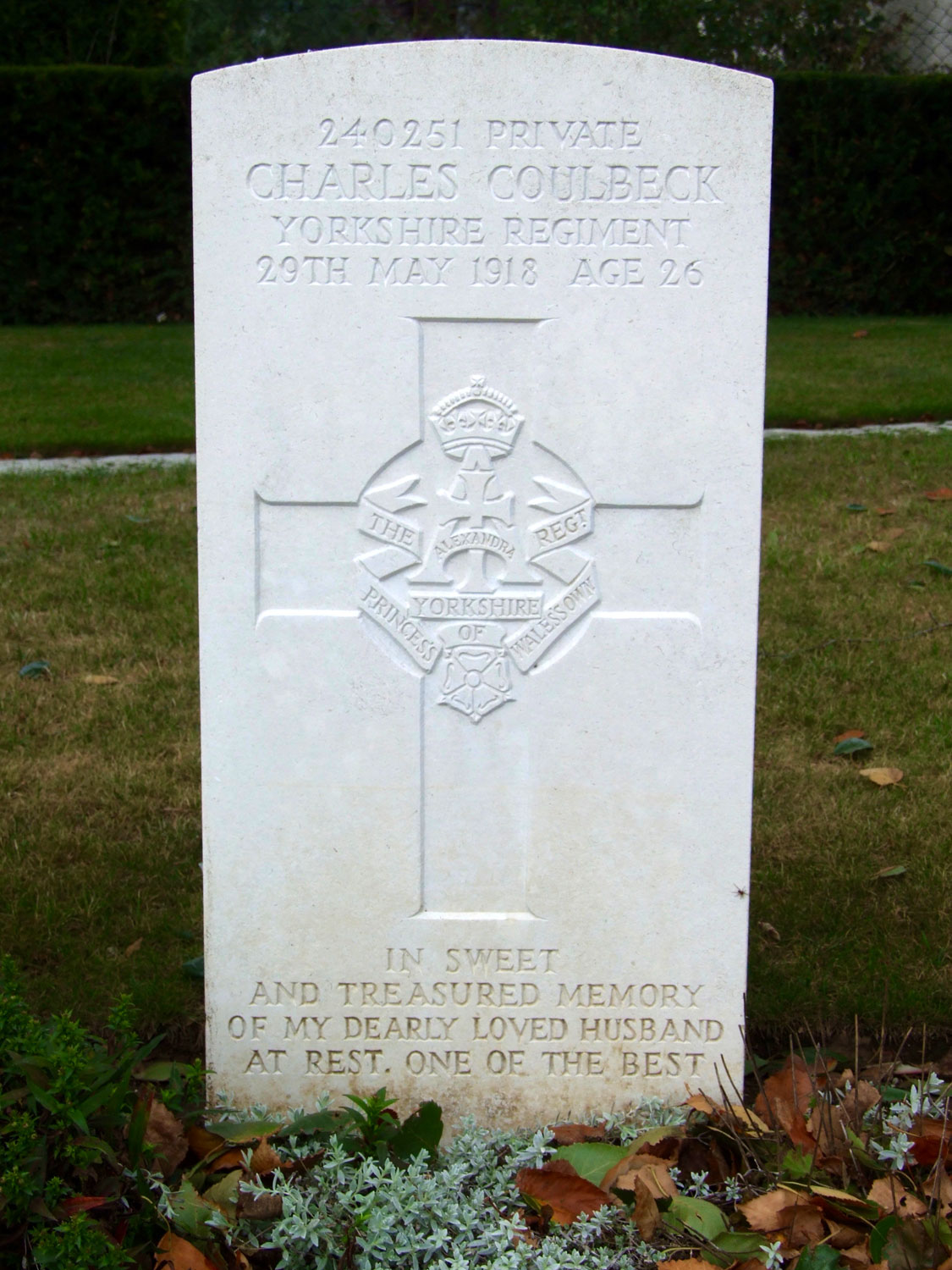 |
Private Charles Coulbeck. 240251.
5th Battalion the Yorkshire Regiment. Son of William Coulbeck; husband of Gertie E. Coulbeck, of 3, Peel Place, North Bar St., Beverley, Yorks. Killed 29 May 1918. Aged 26. Born Beverley, Enlisted Beverley. "IN SWEET AND TREASURED MEMORY OF MY DEARLY BELOVED HUSBAND AT REST. ONE OF THE BEST" |
|
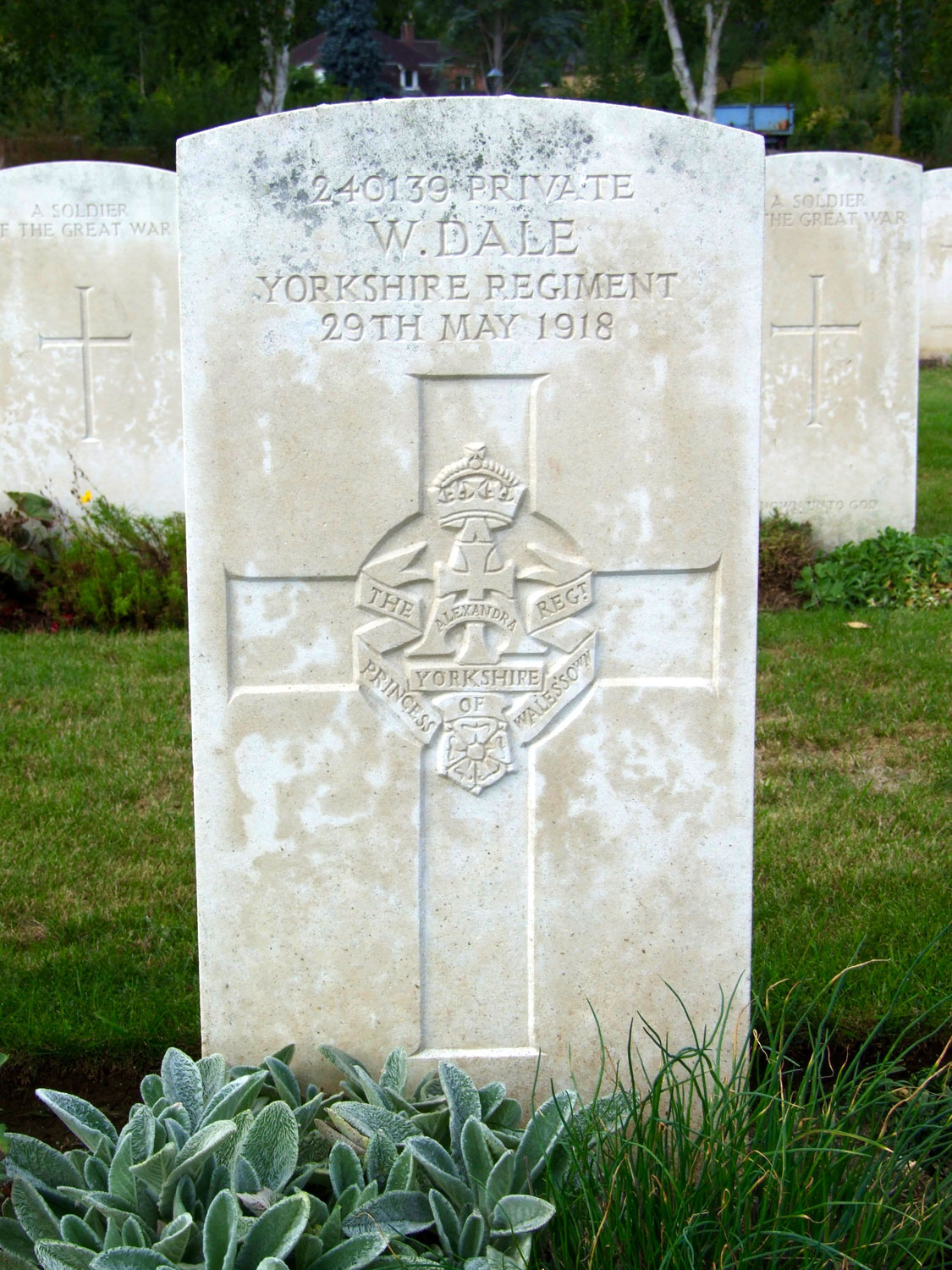 |
Private Walter Dale. 240139.
5th Battalion the Yorkshire Regiment. Killed 29 May 1918. Born Driffield, Enlisted Driffield. |
|
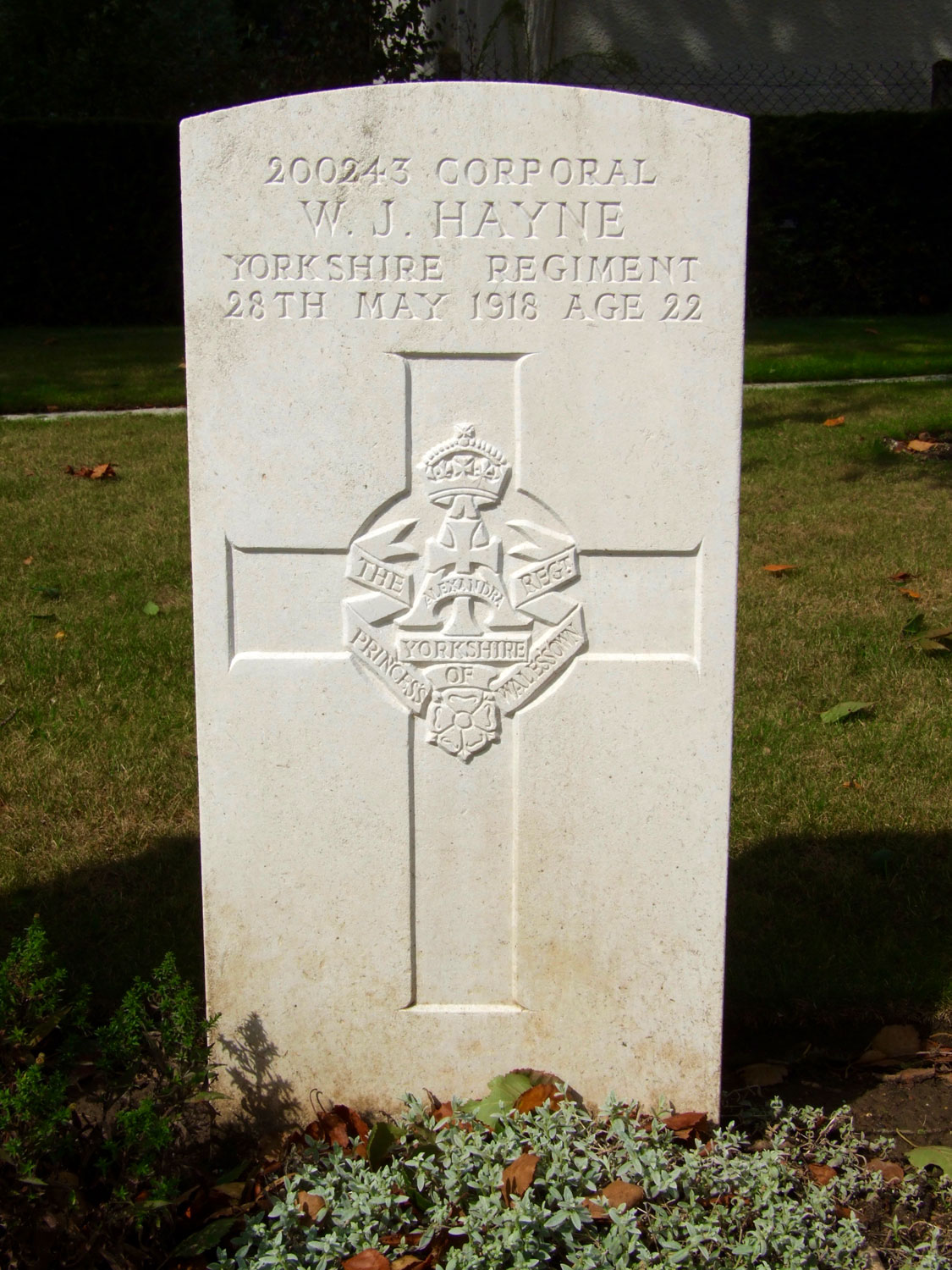 |
Corporal James William Hayne,
200243. 4th Battalion Yorkshire Regiment. Son of William James Hayne and Naomi Hayne, of 140, West Row, California. Eston. Yorks. Killed 28 May 1918. Aged 22. Born Eston (Yorks), Enlisted Normanby, Resided Eston. |
|
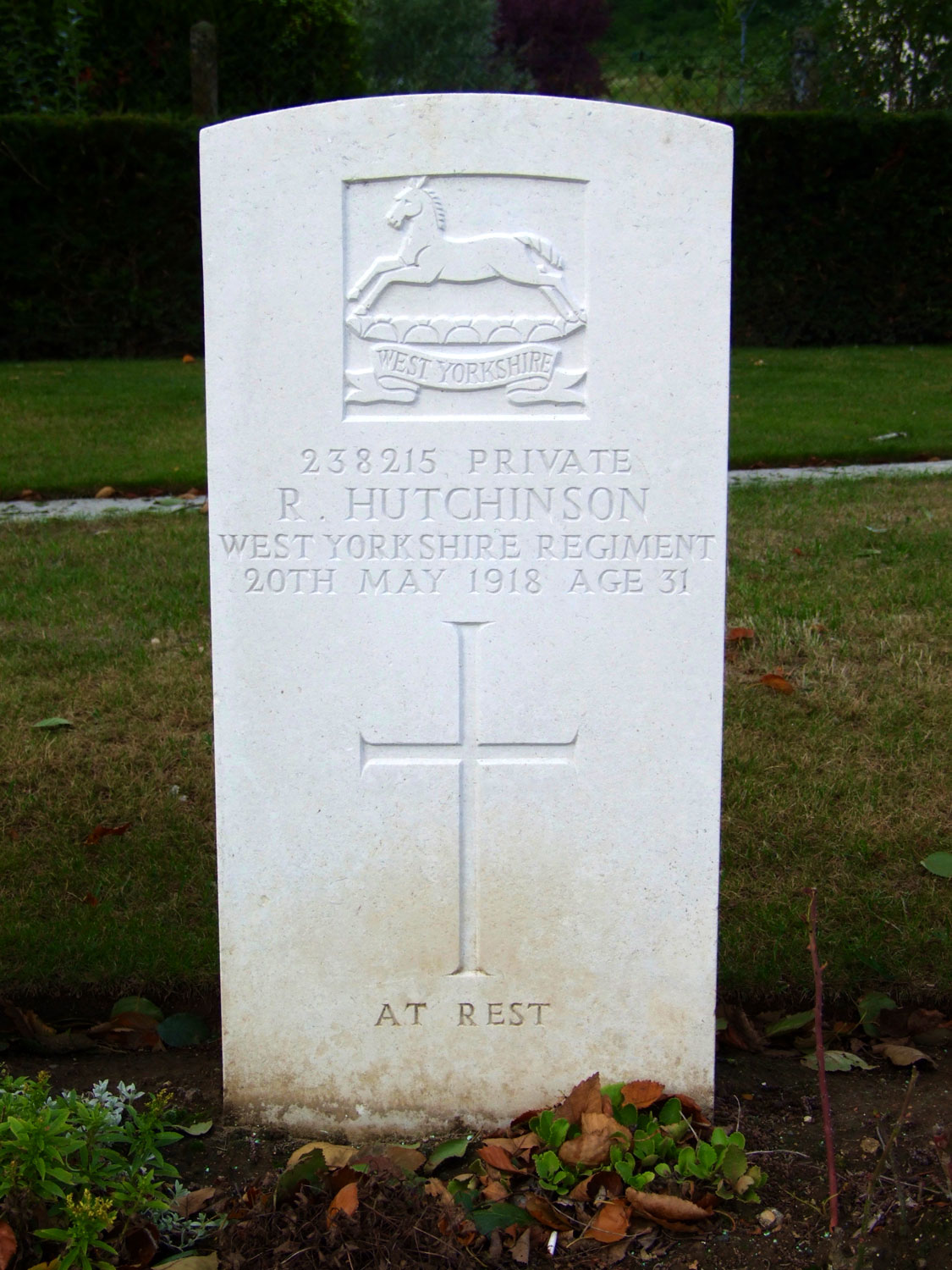 |
Private Richard Butterwick Hutchinson,
238215.
2nd Battalion West Yorkshire Regiment (Prince of Wales's Own), formerly 5293 the Yorkshire Regiment. Husband of Isabel Hutchinson, of Long St., Thirsk, Yorks. Killed 20 May 1918. Aged 31. Enlisted Thirsk, Resided Thirsk (Yorks) "AT REST"
|
|
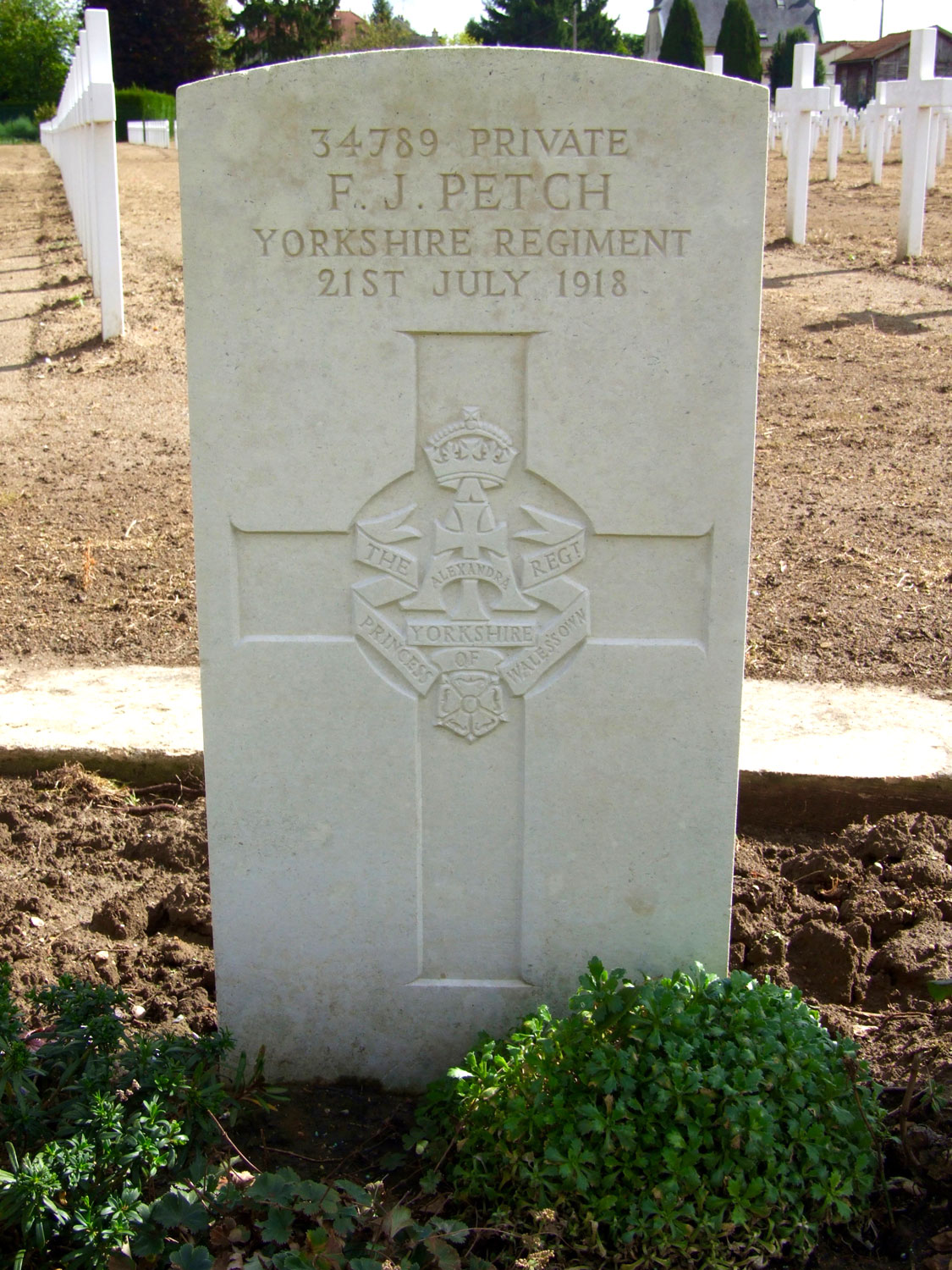 |
Private Frederick John Petch.
34789. 5th Battalion the Yorkshire Regiment, formerly TR/5/10479 3rd T R Battn. Killed 21 July 1918. Born Bury St. Edmunds (Suffolk), Enlisted Bury St. Edmunds. |
 Vailly
British Cemetery, Vailly-sur-Aisne (2)
Vailly
British Cemetery, Vailly-sur-Aisne (2)
Photo : Richard Roberts (<richard.nsw@googlemail.com>)
 Vailly
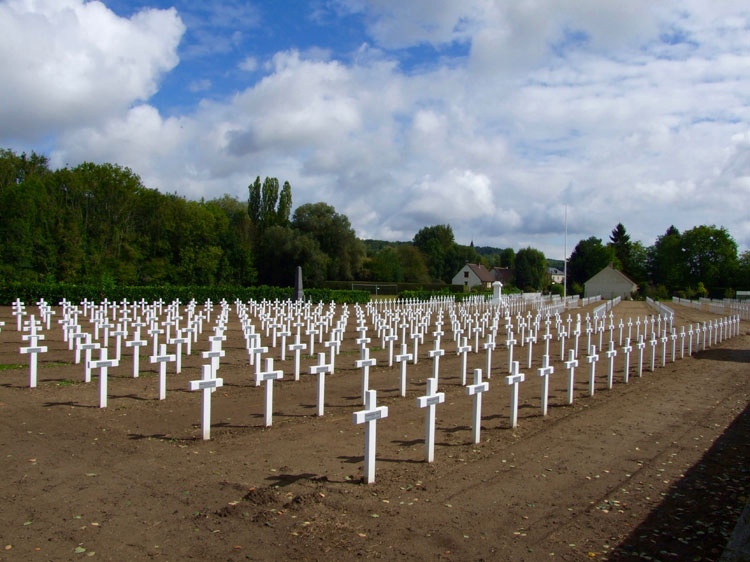
British Cemetery, Vailly-sur-Aisne (3)
Vailly
British Cemetery, Vailly-sur-Aisne (3)
(The adjoining French Military Cemetery, where the soil was being prepared
at the time.)
Photo : Richard Roberts (<richard.nsw@googlemail.com>)